
Bashi Breakout: China's "Law Enforcement" Sovereignty Claim Breaches the First Island Chain

Ray Powell
Share


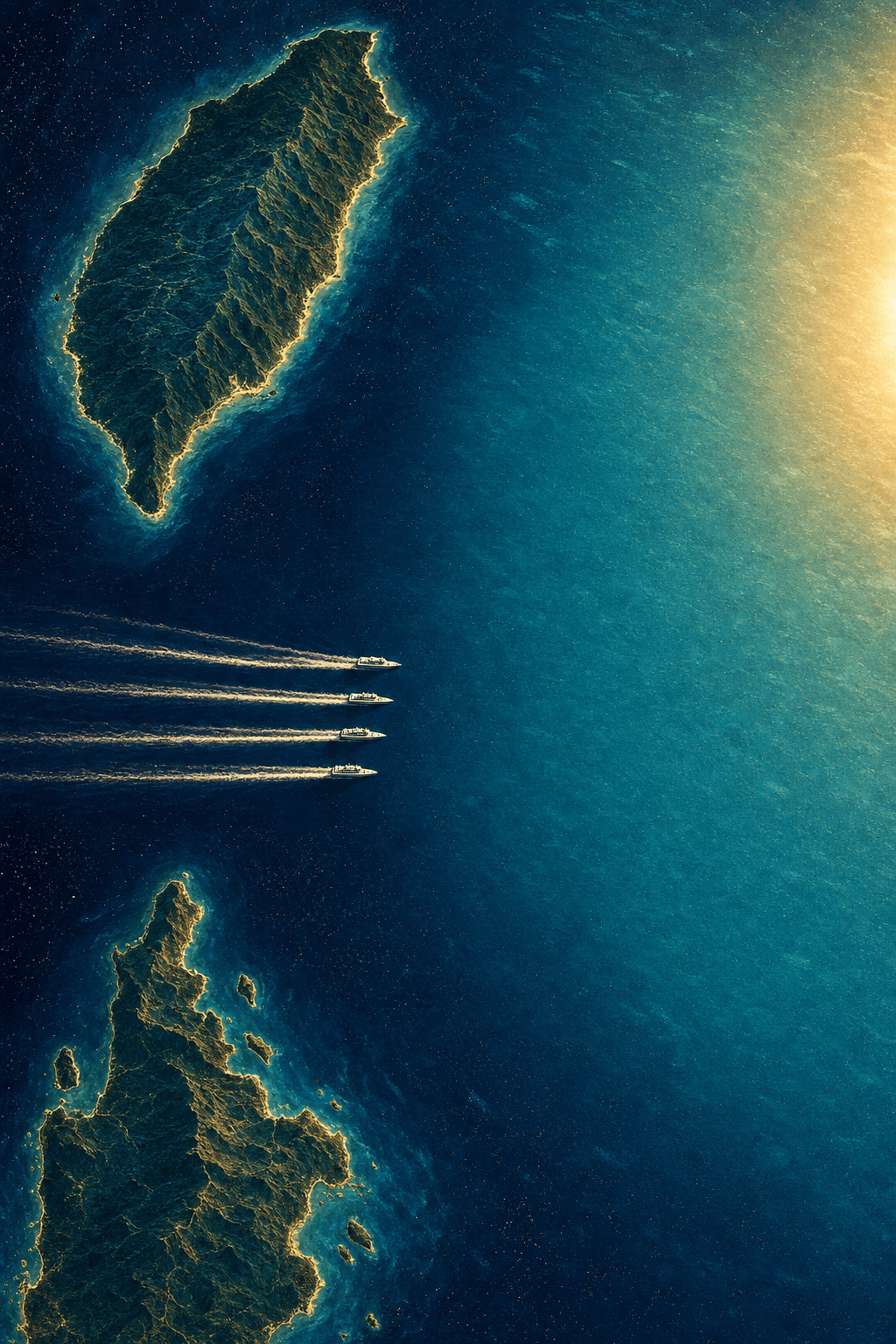
Late on the night of June 7th, four ordinary-looking Chinese government ships pushed through the Bashi Channel -- the strategic gap in the First Island Chain between Taiwan and the Philippines -- and sailed boldly into the open Pacific. Hours later, the Communist Party–run Global Times called the operation "a sovereignty declaration with both legal significance and political signaling."
None of these vessels were navy warships. They were coast guard, safety and rescue ships, the very kinds of platforms Beijing now uses when it wants its presence to be understood as proclamations of its lawful jurisdiction.
This is how China's gray-zone strategy works. It does not hinge on aircraft carriers, destroyers or missile boats. It rests on a law-enforcement vocabulary, in which patrols like this one first become routine, then the basis for internationally accepted sovereignty claims.
The Claim
In August 2023, the PRC Ministry of Natural Resources released its updated Standard Map of China. It showed the familiar (though excessive) nine-dash line around the South China Sea, but added a tenth dash drawn just off Taiwan's east coast, deep in the seam between Taiwan and Japan's southern Yonaguni Island.
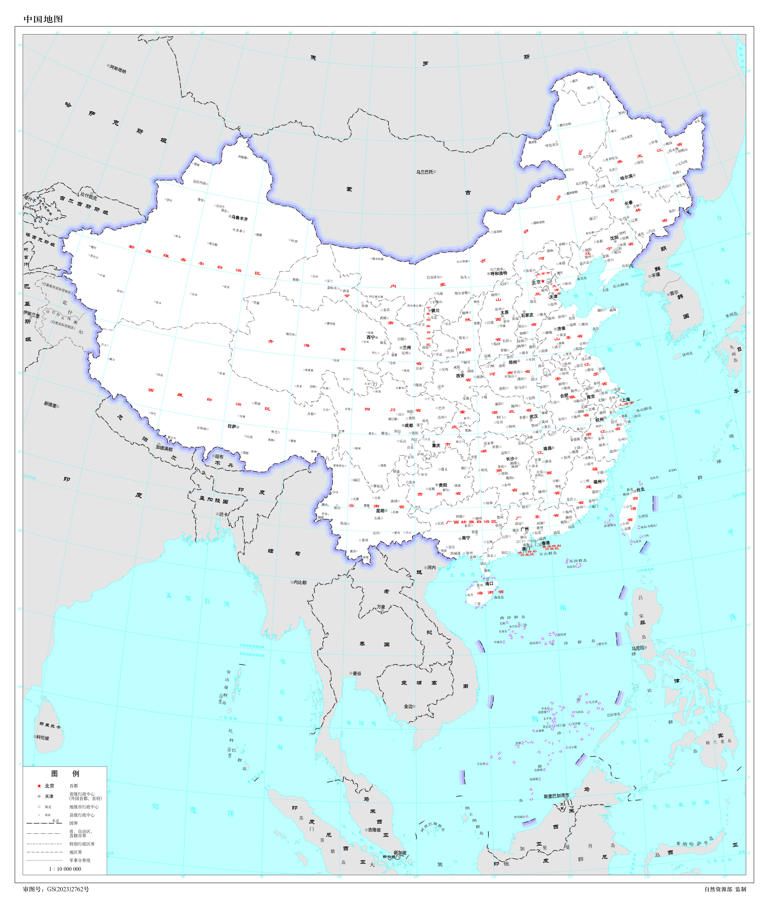
The Philippines, Japan, Taiwan, Vietnam, Malaysia and India all protested this brazen new assertion. However, the rest of the world mostly shrugged and treated this new dash as just one more boring Taiwan-sovereignty gesture.
That turned out to be a mistake.
How big became clear after May 28th of this year, when Philippine President Ferdinand Marcos and Japanese Prime Minister Sanae Takaichi announced talks to delimit their overlapping exclusive economic zone (EEZ) claims, in exactly the kind of peaceful negotiation the 1982 UN Convention on the Law of the Sea encourages.
Beijing sensed an opportunity, and moved quickly to call the talks completely illegal and void. Within a few days a new multi-agency ship formation passed through Bashi Channel. The Bashi Breakout had begun.
What the data shows
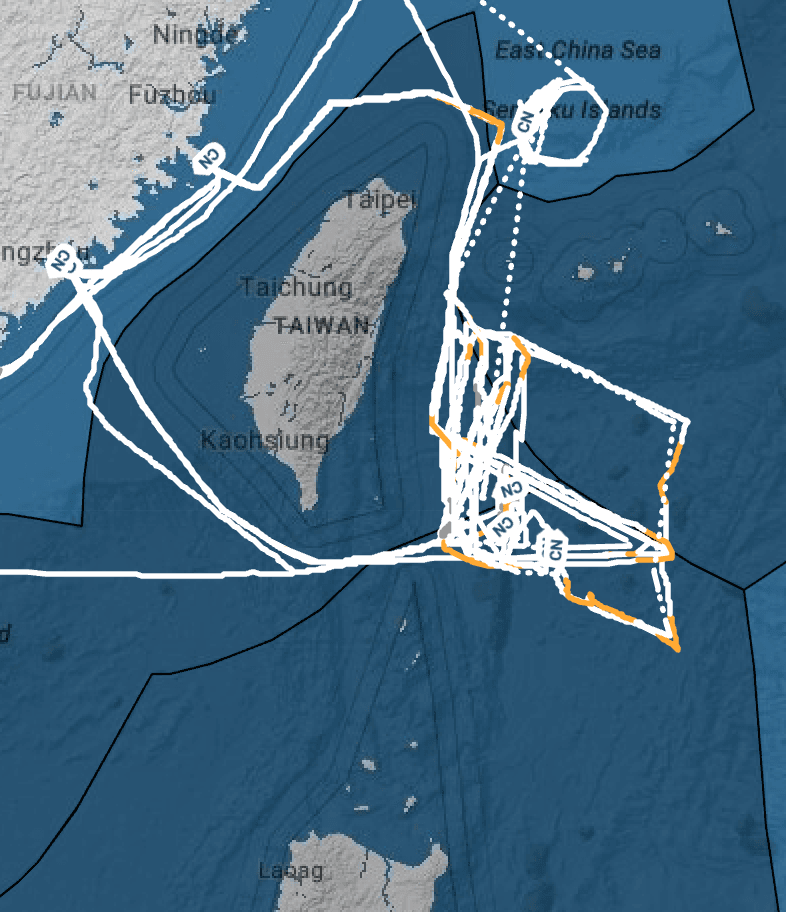
Two Chinese coast guard cutters had already been operating deep in the Philippine Sea before this announcement. From 1-4 June, the Daishan (CCG-2502) and Bai Ta (CCG-2304) were running a tight clockwise patrol pattern east of Taiwan, well past the line drawn on Beijing's 2023 map.
That's because China's 10th new dash was not a fixed boundary Beijing intended to stay inside, but a reference point Beijing could invoke when useful and ignore when inconvenient. In fact, all of China's maritime claims are kept deliberately imprecise, using cartographical dashes and elastic phrases like "relevant waters" and "adjacent waters" rather than defined coordinates.
In Beijing's gray-zone economy, this ambiguity is not a bug but a feature. The right question is not whether the ships stay inside or outside this or that "dash". It's the actual patrol, not the drawing, that defines the claim in practice.
That's why on June 7th three provincial Maritime Safety Administration (MSA) cutters and a salvage tug traversed the channel in a tight cluster, marking the first publicly documented instance of MSA ships conducting a sovereignty-framed Pacific crossing.
The pretext machine
That doesn't mean we haven't seen this kind of pretext-to-escalate cycle before. What's different is how openly Beijing has described this most recent maritime expansion.
On June 1st, the China Coast Guard announced the Daishan task group's patrol east of Taiwan as "a necessary operation in response to" the Japan-Philippines announcement of bilateral delimitation talks. Six days later, a second statement announced the Ministry of Transport's special maritime traffic law enforcement operation using the same pretext.
The state-run People's Daily, Xinhua, CCTV and China News Service all carried the same message. Because ... well, of course they did.
Then came the state-sanctioned commentary. A 1 June Global Times masthead editorial argued that Japan and the Philippines have no overlapping maritime claims to delimit at all because Taiwan (which China claims) lies between them, and then warned that the farther Tokyo and Manila go the heavier the price they will pay. Six days later, the Global Times' 7 June viewpoint piece supplied the key phrase: "sovereignty declaration."
State media commentators reinforced the framing: this was the first time the CCG publicly announced an east-of-Taiwan action under its own enforcement banner (not as part of a joint drill alongside the PLA Navy). The CCTV's viral account Yuyuan Tantan framed each step as deliberate: every advance, it argued, was "lawful and measured," designed "to establish a new, more stable control posture" for China's maritime claims.
A CCTV News schematic, meanwhile, placed the Senkaku Islands to the north, Taiwan's east coast and the Kinmen Islands (the Taiwan-controlled islands just off the Chinese coast) to the west, a closed perimeter around Taiwan.
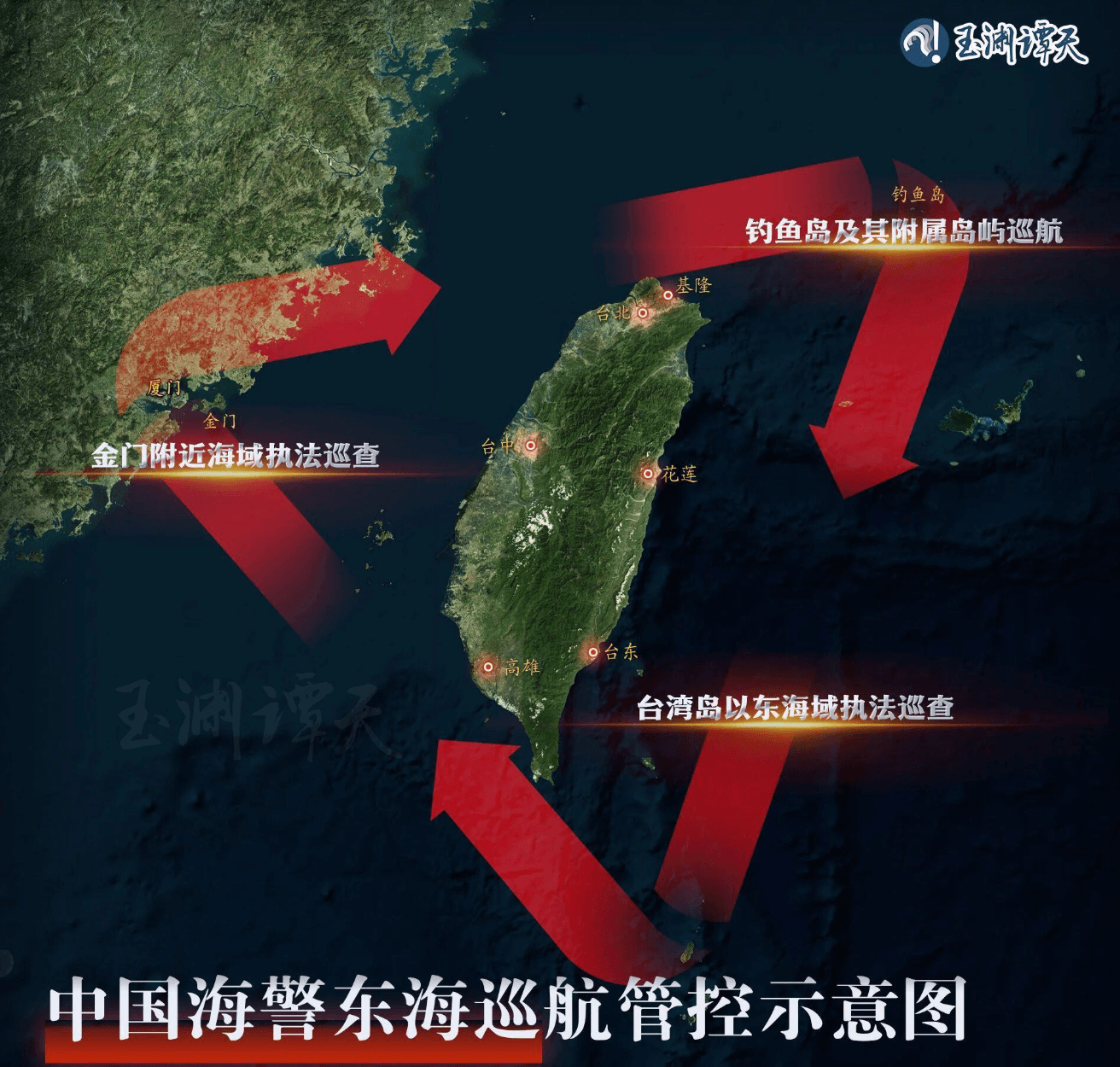
In other words, China's tenth dash was not just a dash. It was a cage.
Let's review: two democratic neighbors announced a peaceful negotiation under international law and precedent. Beijing, however, decided to brand it an infringement, ran a multi-agency paramilitary operation, and had its own media label its operation a sovereignty declaration. It then accused the negotiators of provocation.
Golly, one might almost call that "gaslighting".
Why it matters
America's 2026 National Defense Strategy commits to "a strong denial defense along the First Island Chain," while Secretary of War Pete Hegseth's Shangri-La address centered US Pacific strategy on "deterrence by denial along the First Island Chain."
The 2026 NDS' first real test has not come from conventional PLA Navy operations, however, but from white-hulled "civilian" law enforcement vessels. That's because our anachronistic military doctrine is built around deterring or defeating conventional gray-hulled warships and missiles.
It needs to grow up.
China's gray-zone aggressions thrive in the gaps between our neat binary categories: peace vs. war, legal vs. illegal, military vs. civilian. Gray-zone warfare takes small but deliberate steps, with none big enough on its own to trigger a response until well after those incremental steps become irreversible facts on the water.
The bottom line
A maritime boundary negotiation between two US treaty allies is not a provocation, but by using a well-established (but somehow still poorly understood) playbook, Beijing is casting that peaceful ad lawful activity as the pretext for a coordinated paramilitary operation in waters east of Taiwan.
The First Island Chain has been breached. The question now is whether Washington, Tokyo, Taipei and Manila choose to treat it as a just another one-off infringement or a wake-up call.