
Embassy Echo Chamber: How Beijing Directs Its Propaganda Network in the Philippines
Ray Powell
Share


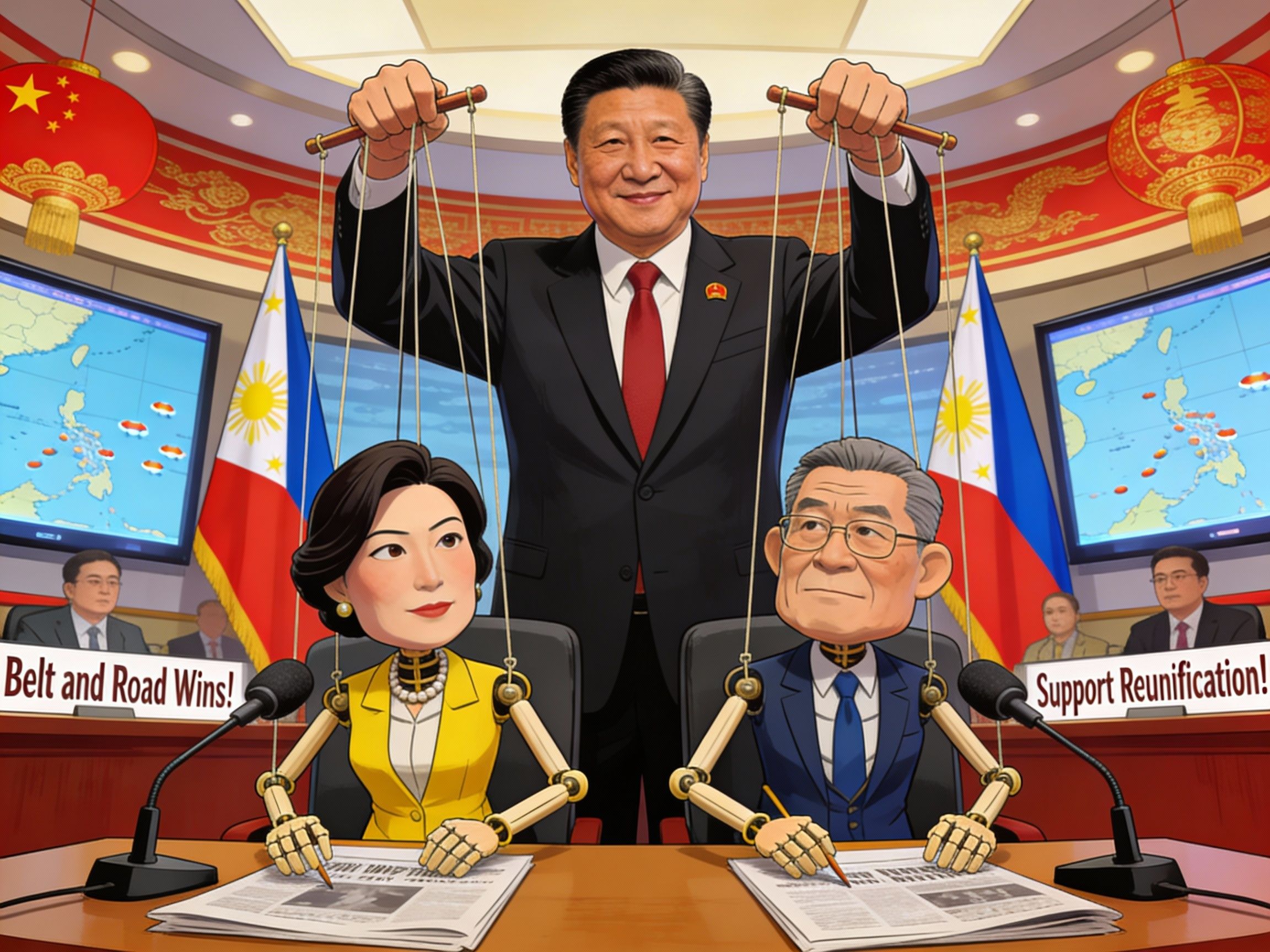
On January 8th, China's new Ambassador to the Philippines Jing Quan summoned executives from eight Manila-based, Mandarin-language news outlets to the Chinese Embassy in an event televised by Chinatown News TV (CNTV).
On the surface there might be nothing especially concerning about this. Why shouldn't the embassy promote Chinese-language media? Why shouldn't those executives meet with the embassy? So far so good ... but then scratch just below the surface and see how CNTV described the proceedings:
Ambassador Jing Quan expressed his appreciation for the Chinese-language media's long-term contributions to promoting China-Philippines friendship, inheriting and propagating Chinese culture, and publicizing the Belt and Road Initiative.The Ambassador’s remarks inspired the delegates in attendance ... China's development is an opportunity for the Philippines, not a threat ... The attendees expressed that they would, as always, cooperate closely with the Embassy, carry forward the tradition of patriotism and love for the homeland found in Chinese media professionals, and act as a bridge and bond.
SeaLight has been studying CNTV's coverage of these events -- including its recent deletion of certain sensitive content -- and found that its so-called "news" reports are uniformly propagandistic, strongly suggesting that such "close cooperation" with the Chinese Embassy is a central organizing feature of its operations.
We find more evidence of this cozy relationship over on China's state media-controlled Southeast Net, a Philippines-focused subsidiary of China's state media outlet Fujian Daily Newspaper Group, which recorded an event in June 2021 in which the Philippine-Chinese Chamber of Commerce presented a 500,000-peso (just over USD $10,000 in 2021) check to Chinatown TV's Station Manger Shi Yu'e (Lolita Ching). The story boldly proclaimed:
Under the guidance and encouragement of the Chinese Embassy in the Philippines and successive Chinese ambassadors, the chamber and the TV station have established a long-term strategic partnership. Chinatown TV has made contributions to promoting China-Philippines friendship, cultural exchanges, firmly supporting national reunification, and promoting the Belt and Road Initiative ...
It is reported that, as the Philippines' only Chinese-language TV station, Chinatown TV has established good partnerships with Chinese media such as China Central Radio and Television Corporation, China News Service, Nanning TV, Quanzhou TV, Feilong Net, Feiqiaoshang, and Southeast Asian media over the past 20 years, and has jointly hosted activities multiple times.
These "partnerships" with Chinese state media are clearly visible on CNTV's Facebook page, which systematically re-posts propaganda directly from China Radio International's Filipino Service. These posts routinely include criticisms of Philippine maritime policy like this China Media Group commentary from last July:
From Second Thomas Shoal to Sabina Shoal and Scarborough Shoal, the Philippines has continuously carried out provocative actions against China, and has repeatedly carried out non-standardized maritime actions that clearly violate international regulations. If not for the reasonable restraint of the Chinese side, the deliberate provocation of the Philippine side would have led to a more serious incident ... The Philippines has thrown the lessons of history behind it and allowed itself to become a source of unrest in the SCS and conflict in the region. This is not only extremely dangerous, but also extremely dangerous.
It's no wonder that a 2021 move to include CNTV programming on the mainstream ABS-CBN News Channel was quickly abandoned after triggering a social-media backlash.
This is more than just a story about CNTV, however. Another outlet represented at the embassy meeting was United Daily News, which is led by Dong Bacui--recently spotlighted in a major feature article by Frances Mangosing in The Diplomat, Beijing’s Invisible Network: United Front Operations in the Philippines. In it Mangosing draws the clear link between the media outlet's editor-in-chief and a well-established arm of the Chinese Communist Party's United Front Work Department--one directly chartered with promoting Taiwan's absorption by China:
Dong Bacui, the chief editor of United Daily News – the oldest and largest Filipino-Chinese newspaper – also serves as [Philippine Council for the Promotion of the Peaceful Reunification with China] secretary general and vice president, sits on the board of the China Council for the Promotion of Peaceful National Reunification in Beijing, and chaired the October forum in Manila.
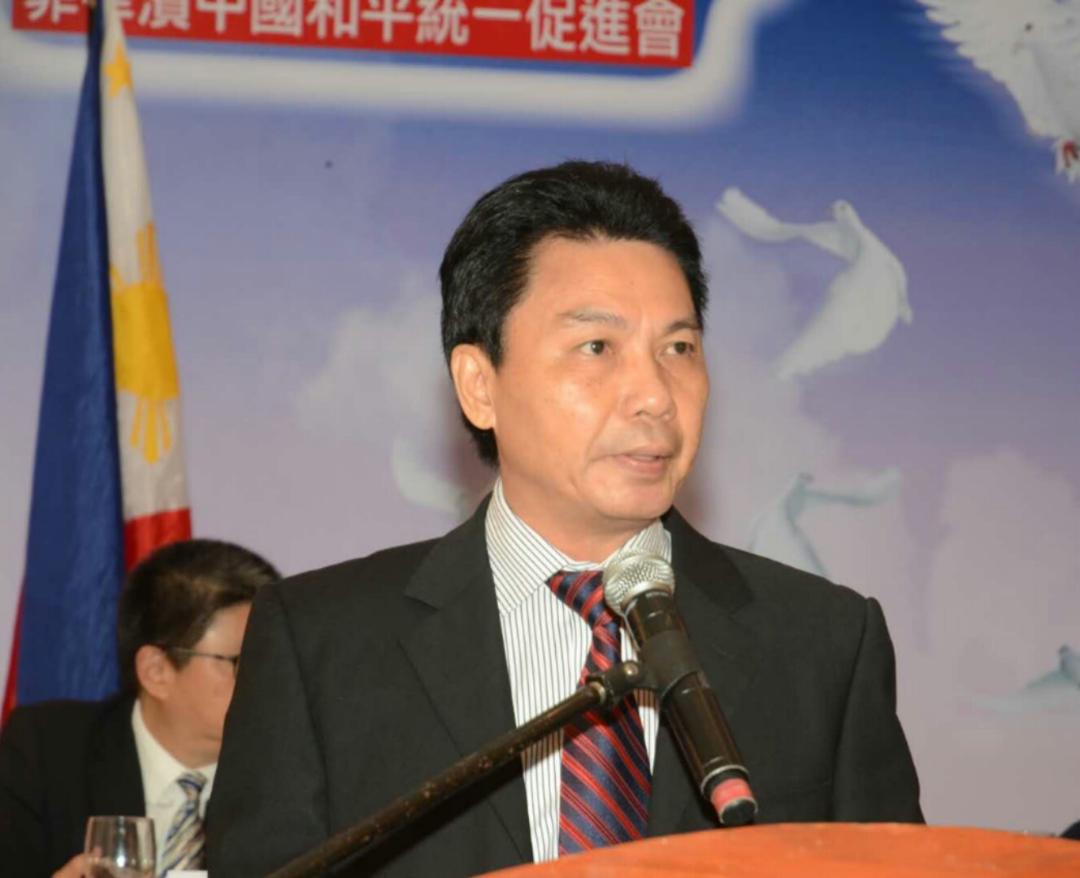
While his name is almost unknown in wider Philippine society, Dong Bacui is extremely influential among its Mandarin-speaking elite and more broadly among the United Front's global "reunification" advocacy ecosystem. He is also, for those who follow such things in Mandarin, a highly prolific propagandist, as he explained in his own words in the pages of Manila's Chinese Commercial News (Shangbao):
In 20 years, I have published over 400 articles in domestic and overseas newspapers, magazines, and websites, including more than 140 in Unification Forum, China Taiwan Net, Huaxia Jingwei Net, and similar outlets. These were reprinted on People's Daily Online, Xinhua Net, Wen Hui Net, Ta Kung Pao Net, Huanqiu Net, China Net, Overseas Net, China News Net, and dozens of major departmental sites, appearing also in European and American Chinese newspapers.
Like CNTV, United Daily News faithfully and uncritically reflects the Chinese government's views when called upon, including running the exact same China Media Group commentary criticizing Philippine policy on the South China Sea.
Ambassador Jing Quan clearly expects Manila’s Mandarin-language outlets to follow the lead of CNTV and United Daily News, “cooperating closely” and “carrying forward the tradition of patriotism and love for the homeland” on command. Yet the bigger question is how many Filipinos realize just how much CCP propaganda is flowing through these local "news" rooms.